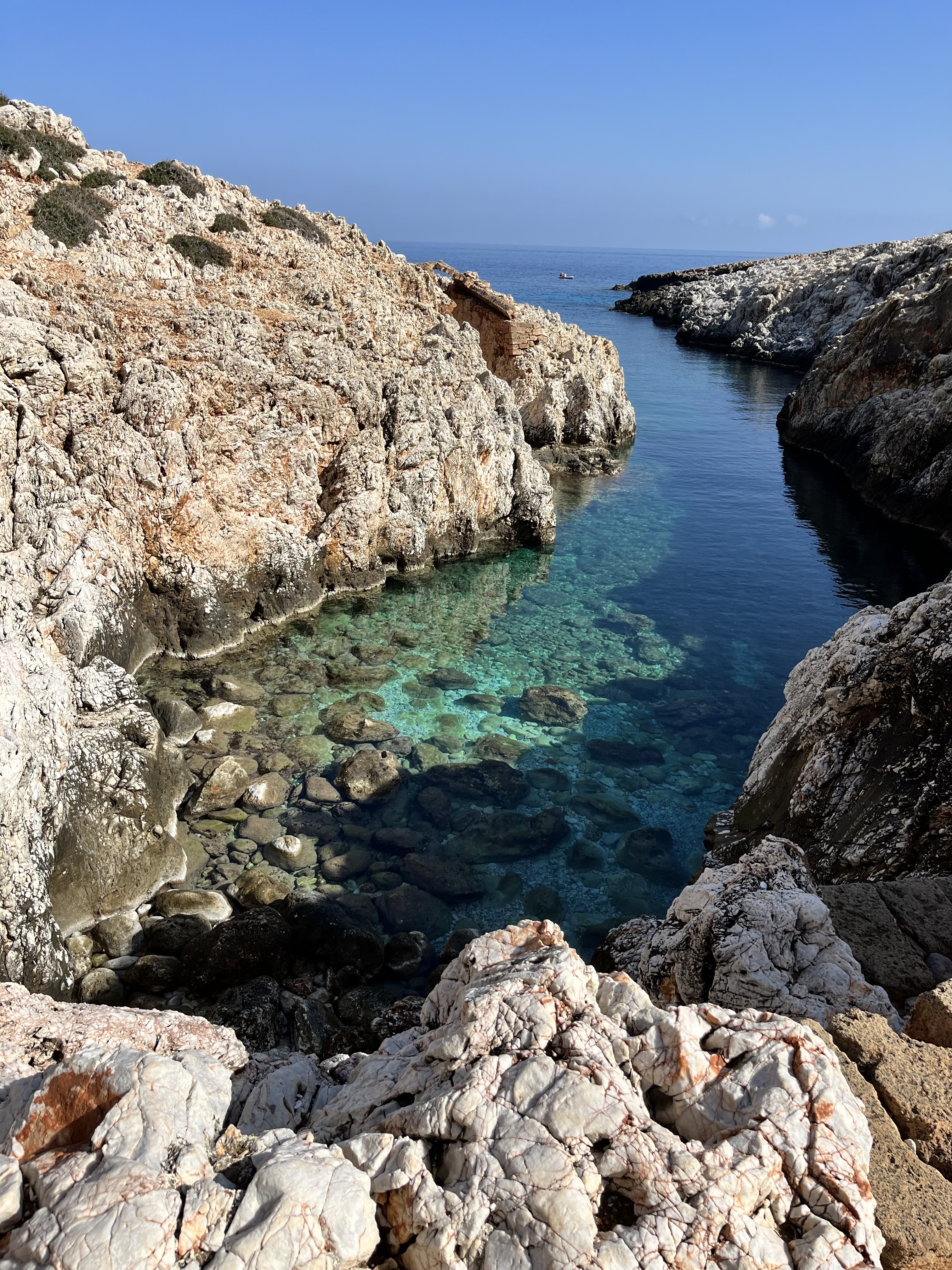
Via ibidem—whilst readily admitting that the profusion of photography competitions is something we’ve bemoaned in the past to the point that PfRC has considered launching its own, thinking about the opened-hand slap of a comment that a college classmate of mine expressed thirty years ago, “Well—who wouldn’t have taken a picture of that,”
which I think about every time I photograph something patently photogenic and already on everyone’s Instagram feed, and that smartphone contests really ought not to be a category apart given their ubiquity and automatic and deskilling obliquity that optimises now without consent we did quite enjoy scrolling through these superlative images from the nineteenth annual IPPAWARDS crediting the photographer’s eye rather than their equipment, acknowledging that the latter does define the former and who gets to call themselves an auteur with cameras at the ready for billions, presented in a format similar to the photo app of the iPhone with minimal details and specifications. Take a look and let us know your favourites.
Friday, 28 August 2026
lucky shot (13. 748)
qr-trees (13. 747)
Admittedly perhaps a bit pointless and we are still, perhaps unqualifiedly, a bit wary of scanning some random, inscrutable code on the street that we don’t know where it goes just like for anything else that we don’t know where its been, we did however, courtesy of Web Curios, appreciate the aesthetic of these customisable quick-response codes represented as trees in the season of one’s choosing.
A tap on the sharable image reveals the grid. The QR just links to PfRC, we promise. The matrix barcodes have been around since 1994 and were invented by a Japanese company specialising in machine readable labels called Denso Wave for stock control of automotive parts. The website also sells products in the form of other images to decode in different genres and styles—some of which are marked nonsensically as sold-out.
nederlandse spoorwegen (13. 746)
Via the always engaging Maps Mania, we found this animated transit schema of trains in the Netherlands quite enthralling. 
The looping simulation captures and displays in real time all the rail activity of a twenty-four hour period from a specific day (13 July in this case) with all the delays and connections shown, whereas most live metro visualisations track movement over conventional geographic maps. There are also additional links for bus connections and the broader trein network—the NS refers to the country’s national operator, headquartered in Utrecht.
synchronoptica
one year ago: assorted links worth revisiting (with synchronoptica) plus the local contact languages of Shanghai
two years ago: the introduction of Pepsi
three years ago: an art installation to be hidden away for a hundred thousand years plus AI fails to spot distinguishing features
four years ago: a banger from Culture Beat plus a short lived spy series
five years ago: your daily demon, more links to enjoy plus photographer Arthur Tress
six years ago: the murder of Emmett Till (1955)
Thursday, 27 August 2026
day one hundred seventy-four (13. 745)
Amid calls for Canadians to boycott US travel and exports, Trump signs an executive order to rename Lake Ontario as Lake America, ignoring the indigenous monicker that predates both settlers and additionally EO aimed at securing America’s bulk-power system, declaring a national emergency to protect the electrical grid by prohibiting non-domestic equipment systems, just as he has restricted foreign built WiFi routers and robots.
Moreover, Trump dismisses concerns over a Russian provocation on NATO territory. Moscow threatens the UK following Andy Burnham’s pledging to provide Ukraine with long-range missiles. After mediation from Qatar, Iran’s security chief drafts a list of conditions for the reopening of the Strait of Hormuz—adding that the US must first take practical steps to fulfils demands before the waterway is cleared for maritime traffic.
le baiser de l’hรดtel de ville (13. 744)
Best known for his commission for Life magazine, known in Anglophone circles simply as The Kiss as an internationally recognised symbol of young love—from a series of images for a photo essay on affection and infatuation in the capital, we quite enjoyed this collection—
it is a Russian LiveJournal site but seems safe to peruse though some of the later marquee pictures are water-marked—of humanist photographer and photojournalism pioneer (privileging the documentation of the everyday over the reportage of the latter) of Robert Doisneau’s lesser known works, spanning his entire career from the 1930s to the 1990s, courtesy of Messy Nessy. His work gives prominence to the street culture of children and unstructured play in urban environments, unfettered by parents and teachers. Before becoming a freelancer, Doisneau worked in industrial advertising and then for the Rapho agency in Paris, the world’s oldest press syndicate specialising in images until WWII and the occupation of France, using his picture taking skills and training as a draughtsman to forge passports and identity papers for the resistance. His first commercial photo essay was on the subject of the Saint-Ouen flea market, Le marchรฉ aux Puces, which he sold to the publication Excelsior.
synchronoptica
one year ago: Trump tries to out Fed board member (with synchronoptica), a US consulate in Nuuk plus an unapologetic AI hater
two years ago: a skilled sniper plus a circle-and-spoke map of the London Underground
three years ago: The Guinness Book of World Records (1955)
four years ago: George Jetson’s birthday (2022), St Monica, AI displays a certain virtuosity plus assorted links worth the revisit
five years ago: the eruption of Krakatoa (1883), an interactive job listing plus more round-trip words
six years ago: the Zugspitze summitted (1820), mail-order shopping, abundance of caution, the Hatch Act of 1939 plus an antique German friend book
Wednesday, 26 August 2026
day one hundred seventy-four (13. 743)
The Revolutionary Guard report that Tehran and Muscat have reached a deal on traffic control and revenue sharing for the Strait of Hormuz. A Kuwaiti oil tanker attempting to cross the waterway is fired upon and shipwrecked in the gulf.
Crude prices, paradoxically, continue to edge lower despite the total stoppage of flow. US CIA director John Ratcliffe’s unannounced visit to Russia is reportedly to persuade Moscow to join in Operation Economic Outcast and the embargo against Iran (which the US has kept up for the last fifty year with only marginal measures to add)—but undisclosed objectives could be more sinister, like backstabbing Kyiv or requesting a disinformation campaign ahead of the elections or directed at Canadian separatists. Qatari prime minister Sheikh Mohammed bin Abdulrahman heads to Iran for peace talks as Netanyahu tells Trump diplomacy will not work with the Islamic Republic—Israel, with the backing of America, defaults to bellicosity towards its neighbours, never in position to have to play nice or negotiate. The United Nations agency for Palestinian refugees UNRWA, in defiance of seizure of facilities by Tel Aviv, says it is not giving up operations.
little computer people (13. 742)
Via MetaFilter, we are directed towards this rather incredible exhibit from the Internet Archive of early computer software that purports some aspect of artificial intelligence with the programme acting as task-masters, adversaries or interlocutors—illustrating the some of the first interactions between humans and machines.
Not only does the curated collection feature text-based adventures (see more) with graphical interfaces, like the 1985 titular game (also branded for some markets and systems as House-on-a-Disk) considered the precursor to The Sims, multiple iterations of the Game of Life and interactive and a few franchise quests, each exhibit has detailed information on its play and provenance plus an emulator to (re)experience them—a few however have an appropriately vintage protocol to run the programme which, on a QWERTZ Mac keyboard—press Scroll Lock and then F2—was at a loss to puzzle out and would be nigh impossible on a Handy. Do poke around and let us know what you find.
ordinary abundance (13. 741)
Via Things Magazine, we quite enjoyed this cozy turn about a tiny apartment that showcases all the features and amenities which were out of reach or unimaginable to generations just a few removed from the comfortable and sheltered lives that many of us live—taken for granted—scrolling through short vignettes that are inexhaustive, not giving the complete the history behind the unseen conveniences,
but in those brief anecdotes we come to appreciate what’s not fully articulated that underpins their engineering and the larger systems behind them. Of course we knew about the savings in labour but it isn’t something that presents itself with enough regularity, particularly when bemoaning doing a chore that used to occupy a whole day, the work that went into a single garment, distances transversed and the cost of candlepower. We also liked how the suite looks like an IKEA showroom.